Ida Barbarigo: Beyond the Figure
![Ida Barbarigo, Senza titolo (Il Volto) [Untitled (The Face)], 1990](https://static-assets.artlogic.net/w_500,h_500,c_limit,f_auto,fl_lossy,q_auto/ws-richardsaltoun2/usr/images/exhibitions/group_images_override/156/a1920.01033-janlie-geois.jpg)
Opening Reception: Thursday 19th MARCH,6–8pm
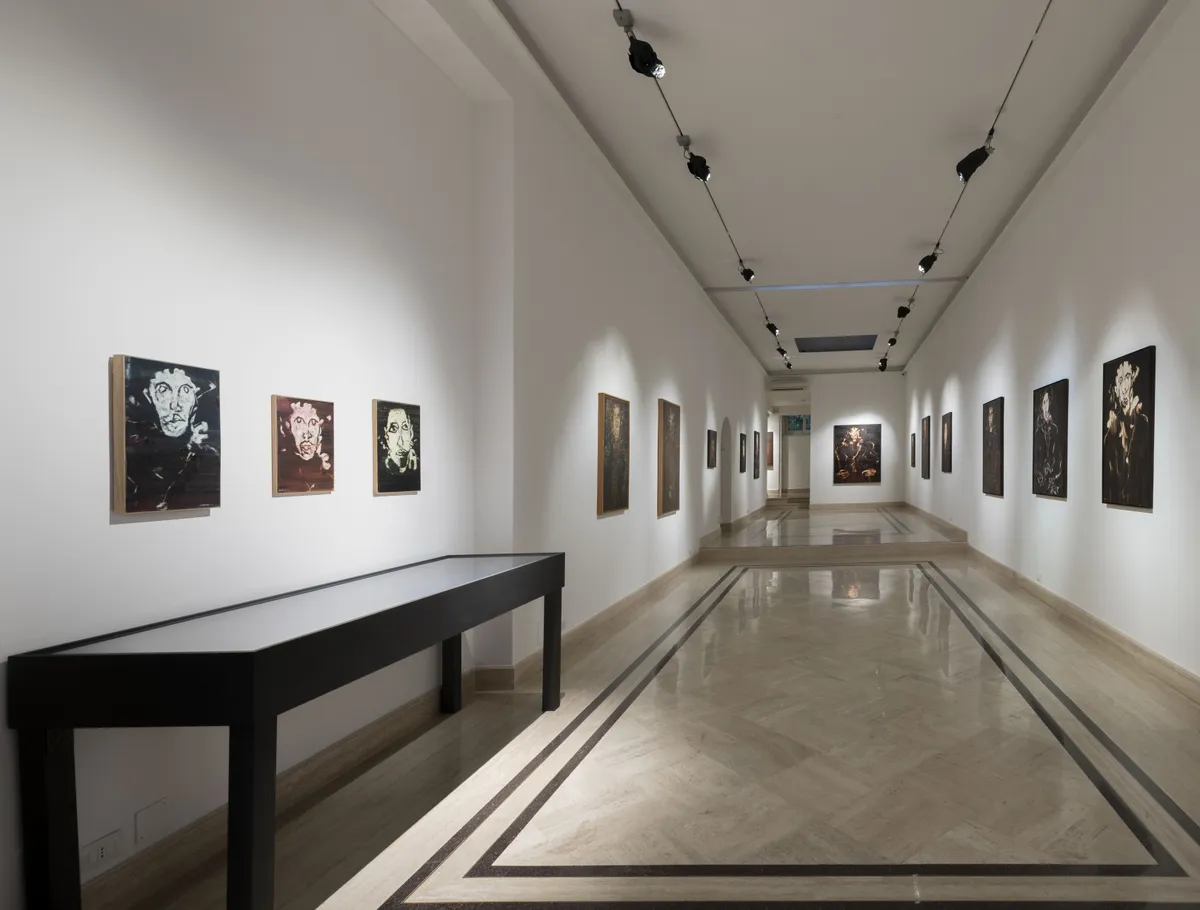
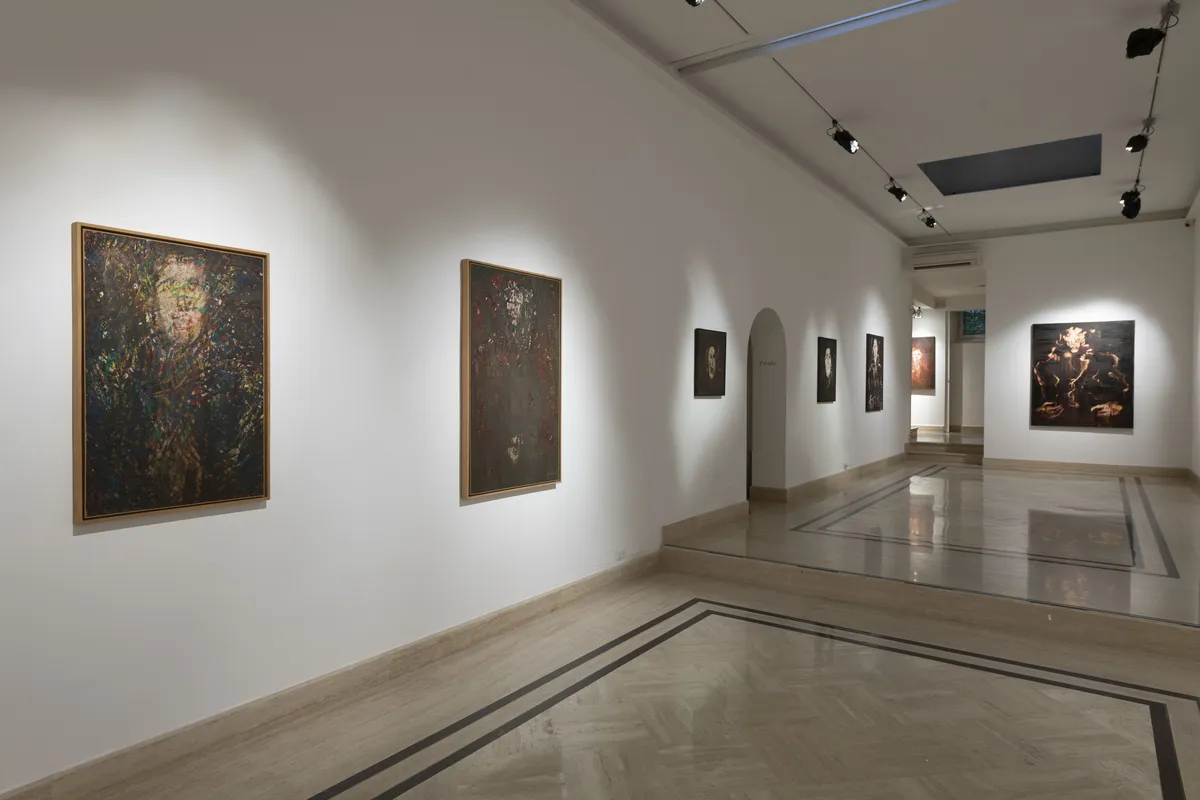
Richard Saltoun Gallery Rome is pleased to present Beyond the Figure, a solo exhibition dedicated to Ida Barbarigo (b. 1920 – d. 2018), among the most distinctive women artists in twentieth-century Italian painting.
Born Ida Cadorin in Venice in 1920 — her father, Guido Cadorin, was an established painter — she later took the name Barbarigo, an invented name, to avoid confusion with her father. During her studies at the Accademia di Belle Arti di Venezia, under the guidance of her father and the sculptor Arturo Martini, she directed her research toward a reinvention of the relationship between figure, space, and reality.
In 1942 she was included in the section ‘Young Talent’ at the Venice Biennale and 1949 she married the artist Zoran Mušič (1909–2005). The couple settled in Paris in 1952 and by the 1970s they moved between Paris and Venice.
In 1972, the Musée d’Art Moderne de la Ville de Paris dedicated a major retrospective to her, and in 1978, Luigi Carluccio invited her to the Venice Biennale, where she presented the “Persecutori” series, a series of large format portraits of legal prosecutors. Nevertheless, despite the attention Barbarigo gave to the figure, she was entirely omitted the exhibitions of this period which heralded the return of the figure.
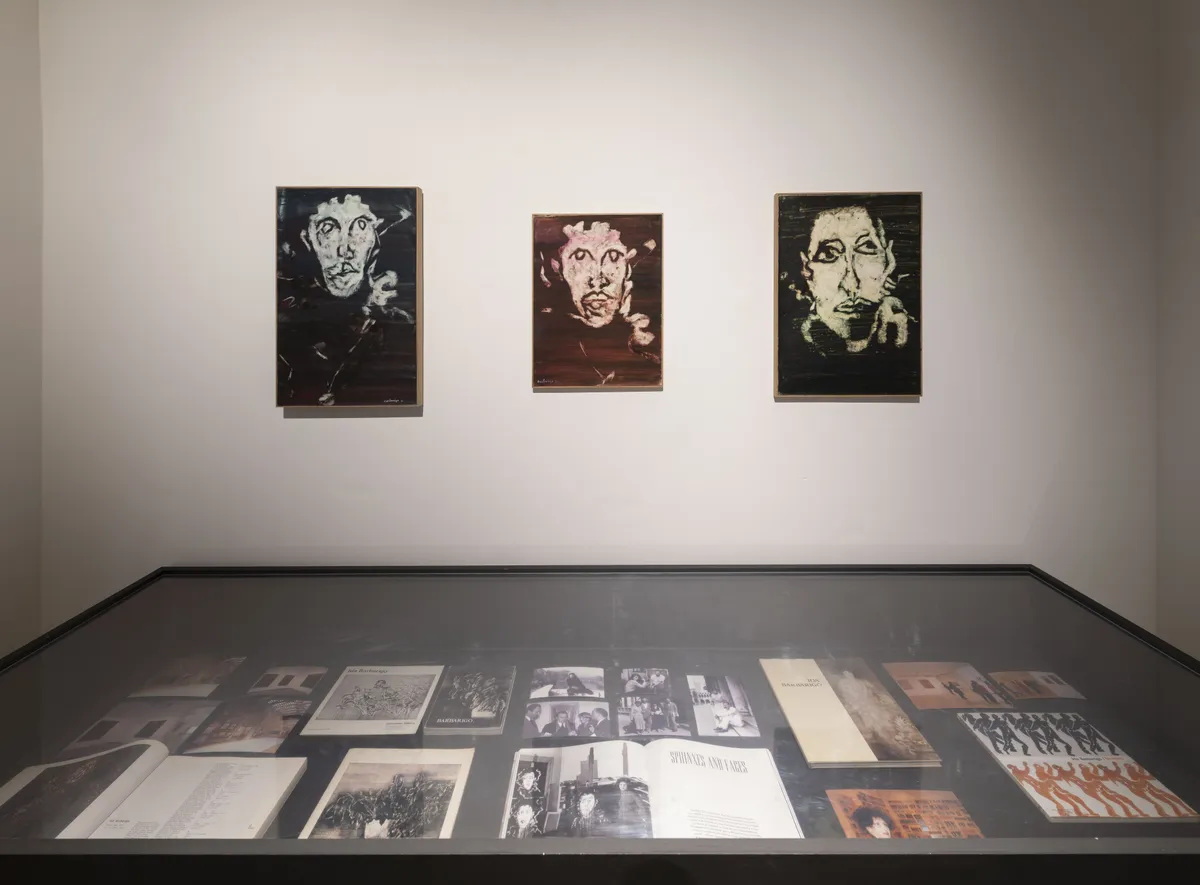
In 1995 she was selected by curator Jean Clair for the main pavilion of the XLVI Biennale di Venezia during its Centenary edition. She was honored with an entire room dedicated to her Le Sfingi (The Sphinxes) series. Clair recognised their centrality within her practice, describing her paintings as capable of “grasping the deep heart of reality.”
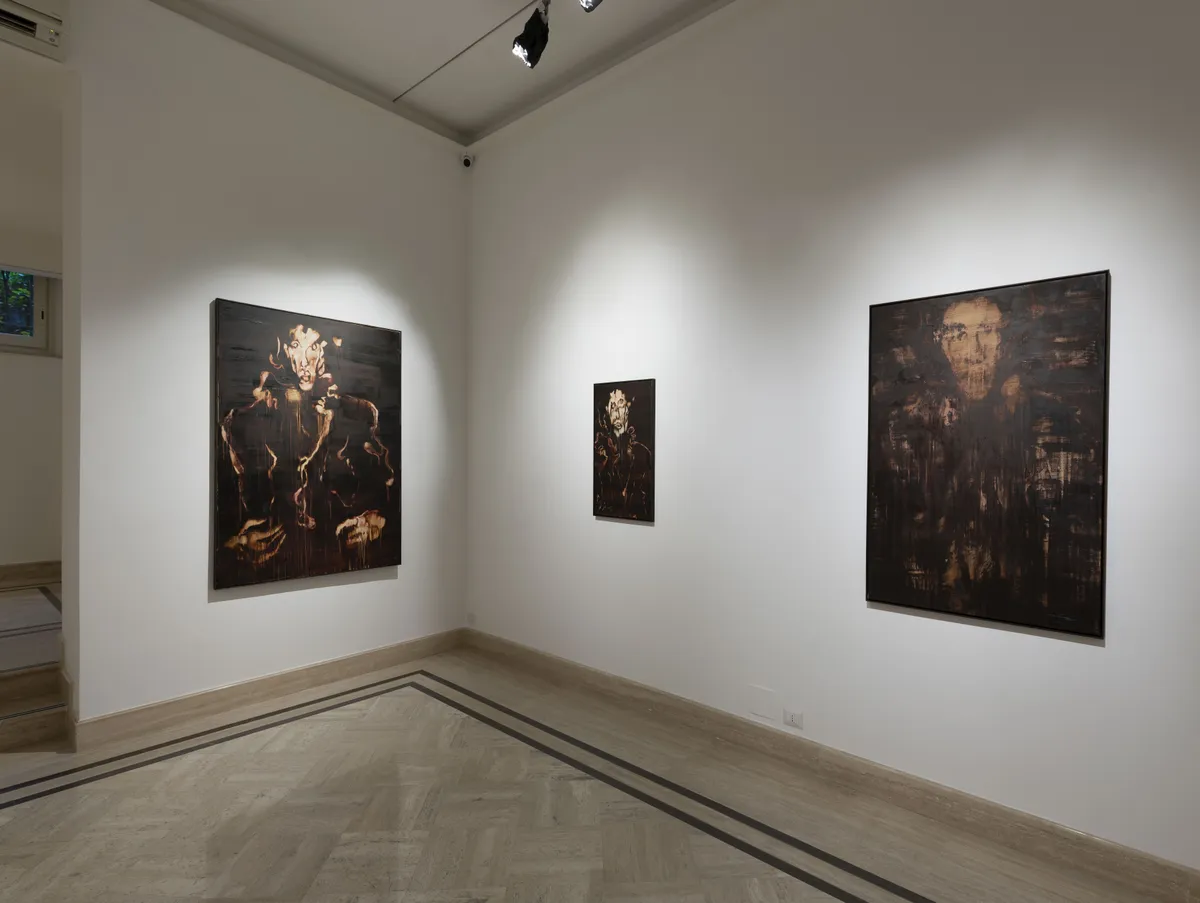
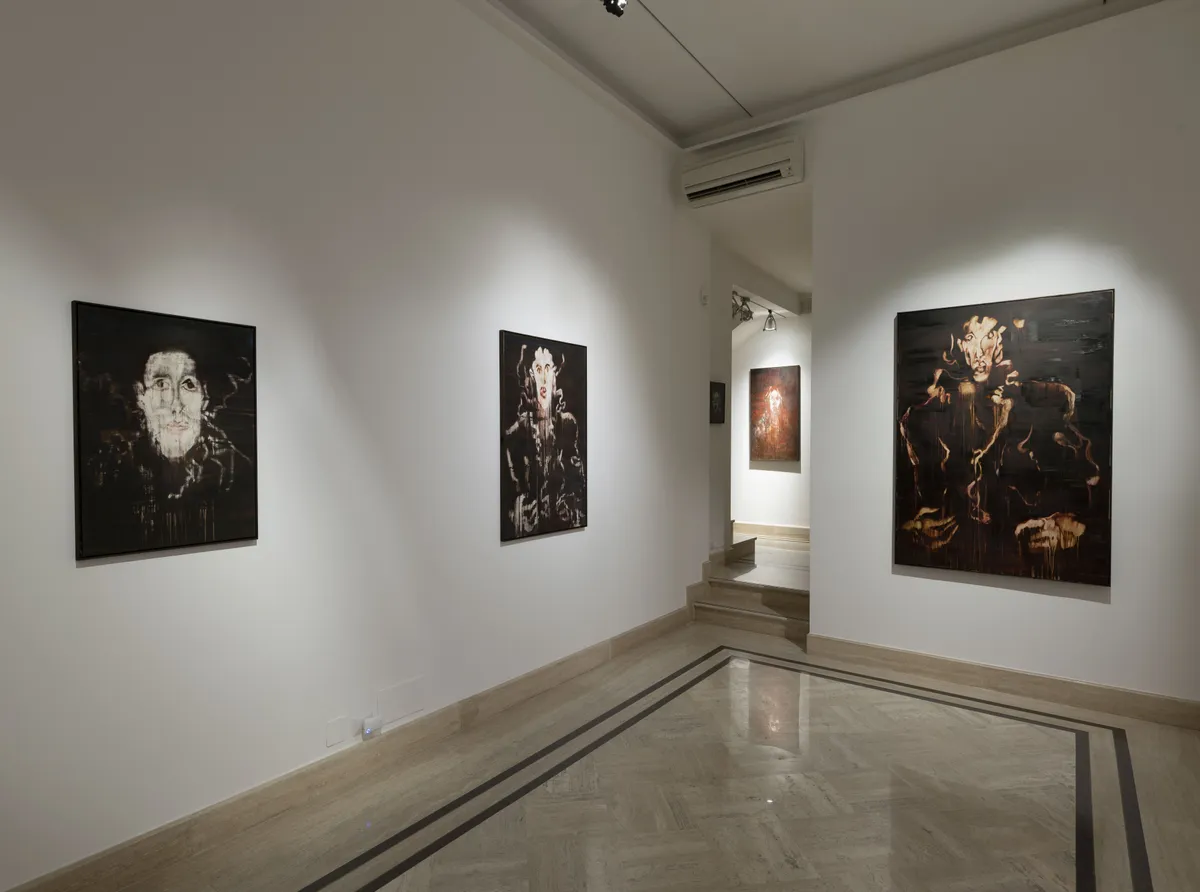
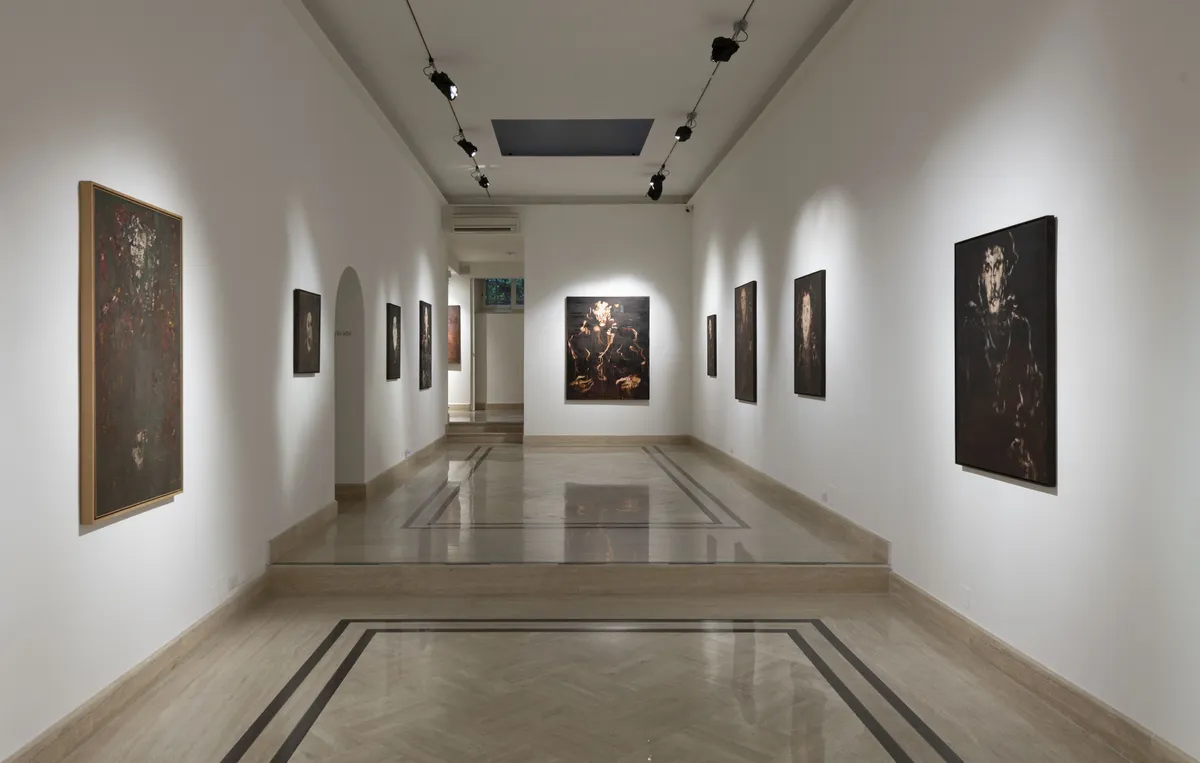
Through a selection of key works from the 1970s to the early 1990, when the human figure returned to the centre of her research, the exhibition offers a renewed perspective on Barbarigo’s practice. Suspended between Renaissance memory and modernity, her work was shaped both by early Renaissance painters notably Giotto and Cimabue in what she described as a “search for truth”— capable of confronting the instability of perception and the complexity of inner experience.
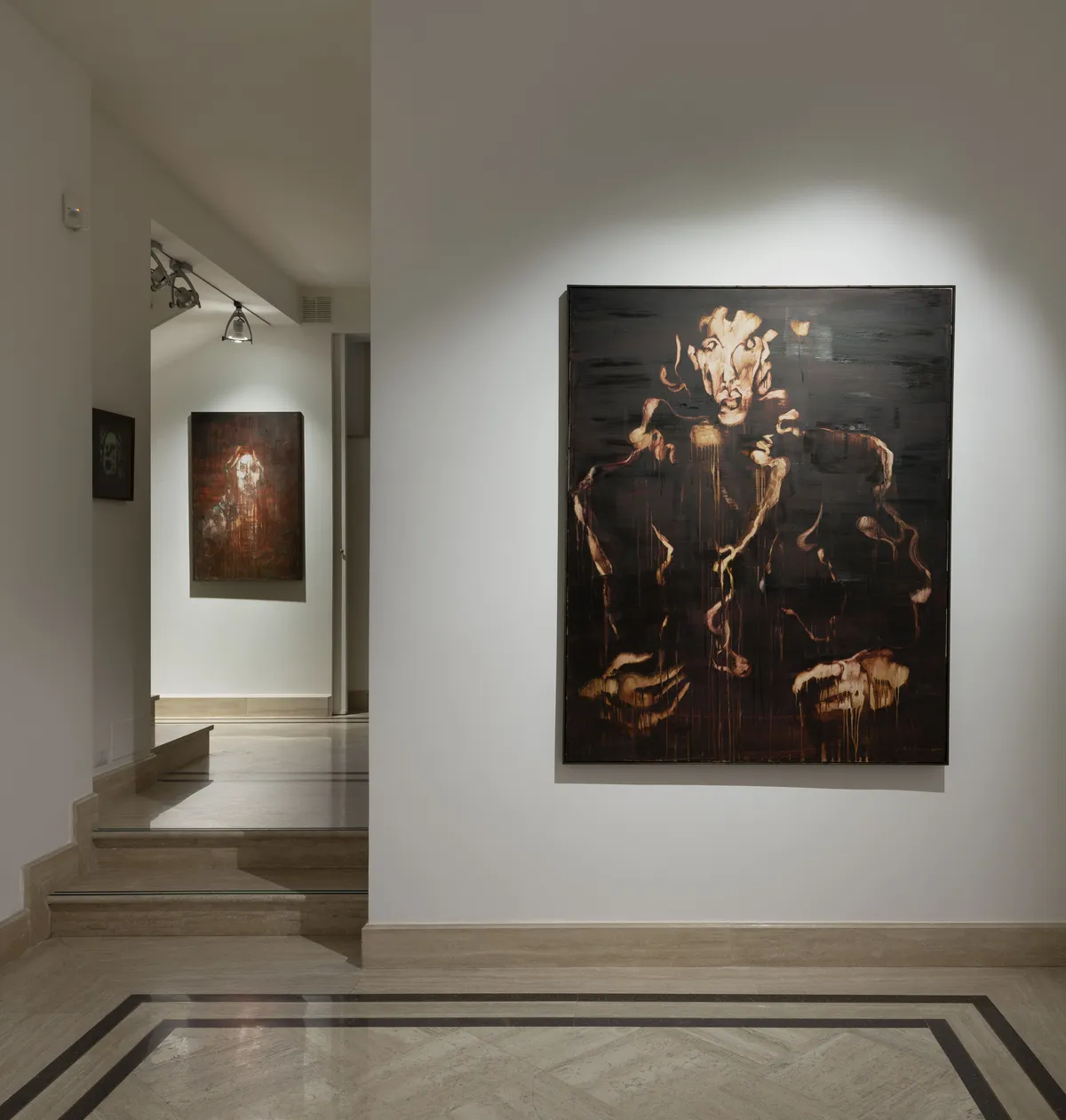
In monochrome self-portraits and in works inspired by Graeco-Roman mythology such as Sfingi (Sphinxes), Volti (Figures), Demoni (Demons), Saturni (Saturns) and Dionisi (Dionysus) — the body emerges from dense, dark grounds, wavering within veils of dragged, poured or stippled paint. Semi-obscured and fragile, the figures appear as spectral presences, titanium-white apparitions suspended within a gestural haze, neither stable nor monumental, but pushed to the threshold of emotional and formal collapse.
-
 Ida BARBARIGOUntitled (Self-portrait), 1992Oil on canvas80 x 65 cm
 -
Ida BARBARIGOSfinge [Sphinx], 1994Oil on canvas100 x 65 cm
39 1/4 x 25 1/2 in -
Ida BARBARIGOTeste minacciose [Threatening Heads], 1990Oil on canvas115 x 87.5 cm
-
Ida BARBARIGOSenza titolo (Il Volto), [Untitled (The Face)], 1990Oil on canvas115 x 72 cm

![Ida BARBARIGO Sfinge [Sphinx], 1994 Oil on canvas 100 x 65 cm 39 1/4 x 25 1/2 in](https://static-assets.artlogic.net/w_600,c_limit,f_auto,fl_lossy,q_auto/artlogicstorage/richardsaltoun/images/view/dcbd1d94ce359413dfe05ad54d114d7dj/richardsaltoun-ida-barbarigo-sfinge-sphinx-1994.jpg)
![Ida BARBARIGO Teste minacciose [Threatening Heads], 1990 Oil on canvas 115 x 87.5 cm](https://static-assets.artlogic.net/w_600,c_limit,f_auto,fl_lossy,q_auto/artlogicstorage/richardsaltoun/images/view/53fbf87f23c302e2348ed18e6c3dfd44j/richardsaltoun-ida-barbarigo-teste-minacciose-threatening-heads-1990.jpg)
![Ida BARBARIGO Senza titolo (Il Volto), [Untitled (The Face)], 1990 Oil on canvas 115 x 72 cm](https://static-assets.artlogic.net/w_600,c_limit,f_auto,fl_lossy,q_auto/artlogicstorage/richardsaltoun/images/view/719a97395281d53b56506a8afeac8696j/richardsaltoun-ida-barbarigo-senza-titolo-il-volto-untitled-the-face-1990.jpg)